Student Drafts: Balancing Clarity and Source Fidelity

When reviewing a draft, focus on how well the text matches the assignment and the sources you consulted. Do not assume that simplifying language automatically improves the work. Instead, check whether each sentence accurately reflects the evidence and maintains the necessary technical precision. This guide offers concrete steps for balancing readability with academic integrity.
Check your draft in Neuroslop.
Preserving Specialist Meaning
Simpler alternatives to longer expressions are often recommended for general writing, but they must not strip away specialist meaning required by the assignment. Treat style guidance as a starting point, not a rule that overrides technical accuracy. If a term is essential to the argument, keep it. For example, if a biology assignment requires the word "mitochondria," do not replace it with "cell parts" just because it sounds simpler. The goal is clarity without sacrificing precision. Always verify that the simplified version still conveys the exact concept intended by the source material.
The Australian Government Style Manual recommends simpler alternatives to longer expressions; treat this as writing guidance and preserve any specialist meaning the passage requires Australian Government Style Manual.
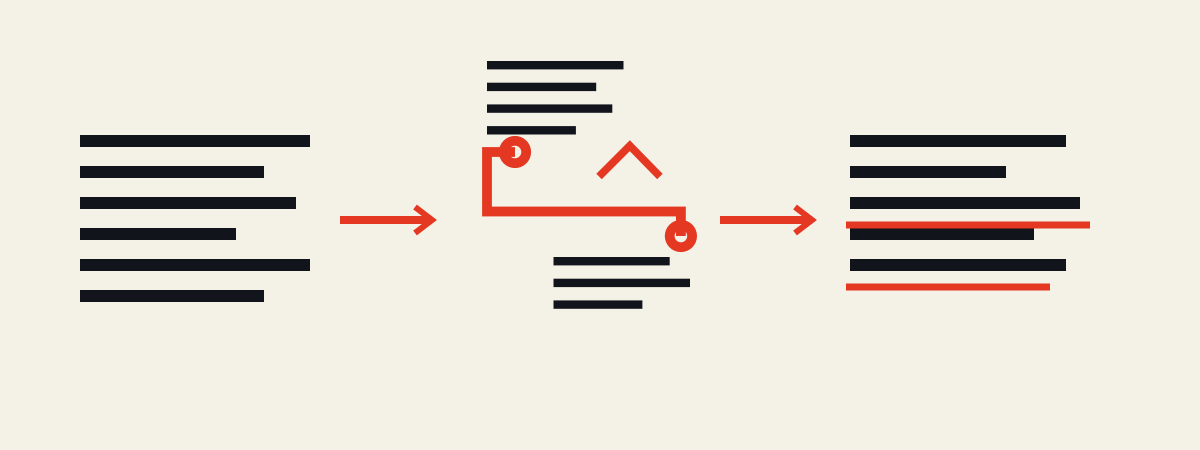
- Find the source
- Compare the claim
- Keep the conditions
A conceptual workflow, not measured results.
Using Review Techniques Effectively
Reading aloud or using a screen reader can help identify wording that needs clarification or shortening. This is a practical review technique, not a guarantee of clarity or rankings. It helps you hear where the rhythm breaks or where a phrase feels awkward. However, it does not ensure that the text is original or compliant with ethical standards. Use this method to spot mechanical issues, then move on to deeper checks for source fidelity and argument structure. Remember that a smooth-sounding sentence can still be factually incorrect if it does not match the cited evidence.
The Canada.ca style guide recommends reading aloud or using a screen reader to find wording to clarify or shorten; this is a review technique, not a guarantee of clarity or rankings Canada.ca Content Style Guide.
Checking Source Alignment
After addressing clarity, verify that every claim in the draft aligns with the consulted sources. This step is critical for maintaining academic integrity. Do not rely on AI-generated text to guarantee accuracy; always cross-reference statements with the original materials. If a source states a condition, such as "may occur under specific circumstances," ensure the draft preserves that uncertainty rather than turning it into a promise. This careful alignment prevents misrepresentation and supports a robust, defensible argument. The final check should confirm that the text is both clear and faithful to the evidence.
Sources
Try it yourself: check any text for AI with the free Neuroslop detector.